DAY 2
AM: North Seymour
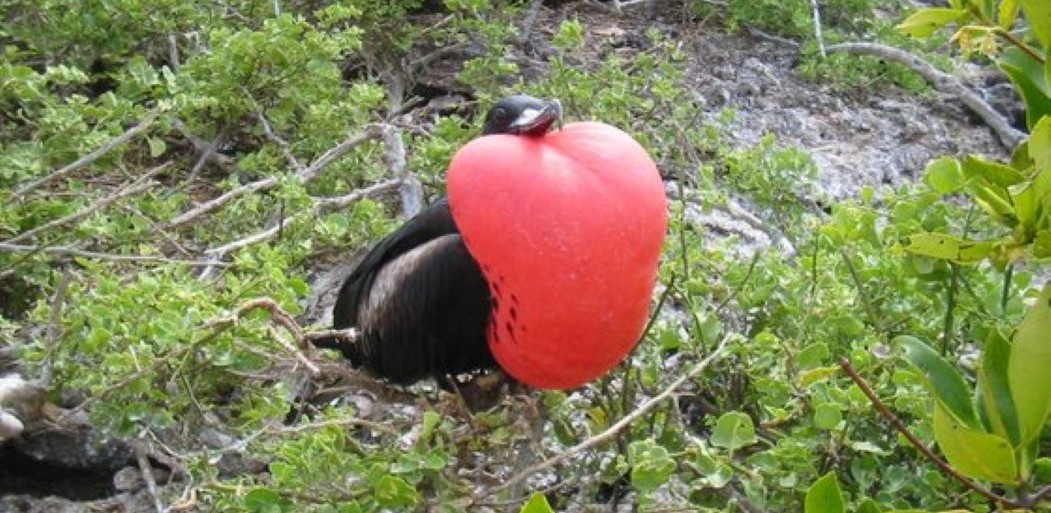
This uninhabited island was formed by a seafloor uplift, instead of a volcanic eruption as most of the islands of the Galapagos. North Seymour is among the most popular visitor site due to the many bird colonies present on the island.
After disembarking, a trail leads to the inner part through the frigate bird colonies to then lead to the beach, populated by blue-footed boobies, sea lions, and marine iguanas.
PM: Dragon Hill
Land iguanas and the flamingo lagoons are two of the highlights of this site. Feral dogs once nearly eliminated the iguanas, but the Galapagos National Park removed them in 1990, and the reptiles seem to be making a comeback. The trail (3km/2 miles round trip) leads through dry-zone vegetation to a small hill where the iguanas live. The area is home to Galapagos mockingbirds, Darwin´s finches, varieties of the endemic Opuntia and candelabra cacti, and Galapagos cotton.
The small offshore island of Venecia is not open for landing, but land iguanas are easy to spot during the panga ride along its shore. These were protected as a breeding nucleus when the feral dogs threatened the main population at Dragon Hill.
Green turtles, sharks, and rays may be spotted on the panga ride, while black-necked stilts, white-cheeked pintails, and migratory shorebirds are usually present on the shoreline.