DAY 2
AM: Bartolome
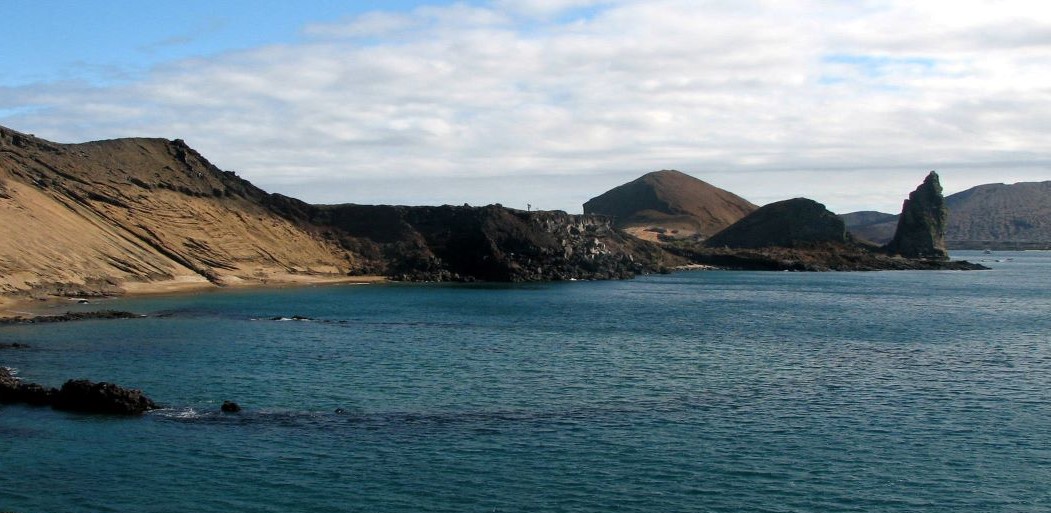
Bartolome Island and its nearby Pinnacle rock, a pointy rock of lava that emerges from the water, are probably the most photographed landscape of Galapagos. The island is an extinct volcano with different formations and red and orange colors, making a unique landscape.
A trail and a wooden staircase lead to an impressive natural viewpoint, from where is possible to see the nearby Santiago Island and Sullivan Bay. This site also has a small beach used for swimming and snorkel and is a very good place to see the Galapagos penguins.
PM: Sullivan Bay
Sullivan Bay is located southeast of Santiago Island, and is of great geological interest. The area is covered by Pahoehoe lava flows (solidified lava in corrugated or accordion form). It was very active in the last 25 years of the nineteenth century. The Sullivan lava formed in 1897. This flow is a geologically very young.
The magma formed is flat, but the movement of underground lava, the rapid cooling and other eruptions led to the break in many places. 200 m around the landing, you can see patterns of vegetation that were burned during the eruption. A visit to this area of black lava is preferable in the afternoon because the temperature is more pleasant and the light is better for photographs.