DAY 2
AM: Rabida Island
Rabida presents a different landscape than the rest of the Galapagos thanks to its red hue, caused by the high concentration of iron oxide in its sand. A wet landing brings visitors to the red beach of Rabida, where a trail leads visitors to the nearby brackish water lagoon, where is possible to observe flamingoes.
The trail continues between two tuff cones and the arid vegetation composed mainly of Palo Santo trees and salt bushes, leading to a white coral beach used as a nesting site of sea turtles and located in the other coast of the island. The island is populated by yellow warblers, mockingbirds, finches, Galapagos doves, Galapagos hawks and brown pelicans.
PM: Chinese Hat
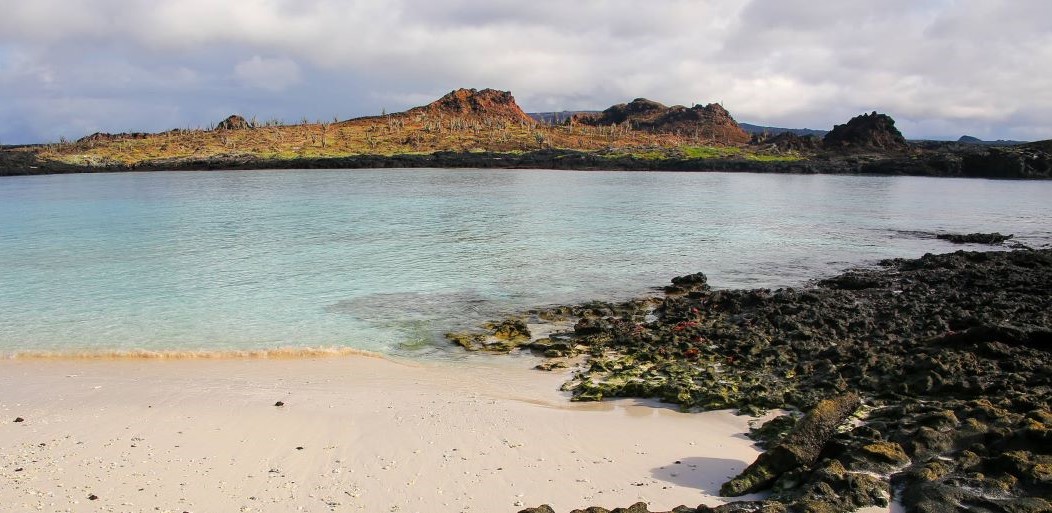
This islet, located near Santiago Island, gets its name from its shape, which resembles a Chinese hat. The islet has a volcanic origin and was formed in one of the many eruptions of Santiago, and was then separated from the main Island by the sea water erosion. The trail starts on the beautiful beach for the islet to then ascend a bit through the lava fields and formations, which are very new in geological terms.
This is a very good place to see how the pioneer vegetation starts to grow directly from the lava, preparing the soil for other plant species. The beach is populated by Sally Lightfoot crabs, American Oystercatcher, marine iguanas and a colony of endemic Galapagos sea lions.